Monday, April 3, 2017

Week 13

Read Chapter 7: Premixing (Color and Light); Last color journal schedule


From today's reading, I mainly learned about mixing color strings, gamut mapping, creating gamut masks, and color scripting. Last Winter semester, I took Illustration 2 class from Justin Kunz. And in the class, we spent almost a month in mixing colors. The chapter reminded me of Justin's class, and it was pretty fun to mix colors up. While reading the chapter, I realized how effective limited palettes are. They give paintings a unity, characteristic, mood, feeling, temperature, and so on. Every time I paint something, I think about limited palette so that I can have those strength all at once by just picking some colors. 

Also, I like learning about color scripts. At the beginning of this year, I worked on my personal project, and I tried to look at other artists' portfolio so that I can plan what to put in my portfolio. Most of portfolios have color scripts or value study, and I decided to have some color scripts in my portfolio as well. As I said, color scripts show us what is the emotion, mood with the drawing. They are very effective to show us the brief summary of colors of the entire portfolio and how artist develops the final painting along with the studies. 

This chapter helps me to remind of the importance of limited colors, and mixing colors in a harmonious way. It was very useful and helpful especially for my portfolios I prepare now for the BFA portfolio review. 


limited palette에 대한 이미지 검색결과

By Debbie Grayson Lincoln

관련 이미지

By Elizabeth Tolley

Monday, March 27, 2017

Week 12

Read Chapter 5: Paint and Pigments pgs 96-99, 104-107 (Color and Light)


From this week's reading, I learned about warm under-painting, sky panels, limited palettes, and the mud debate. I have many things to day about this chapter. First, I really love the sky of Utah, especially Provo. Maybe it's because I live in Provo, and I think Provo sky is so beautiful compared to Korean sky, my country's sky. Korean sky is more polluted than Provo sky because where my house is a city. I love the sky in Provo because it varies according to the time, weather, and temperature. It keeps changing, and it is so beautiful! I love the sky panel of Provo, and one day I can paint the sky here in Provo. 

Also, I like to use limited palettes because it is eventually stronger than using so many colors. Since I became an illustration student, I have heard many good things about limited palette, and that is true. I love colors, so I tried to use colorful colors as much as I can, but that was not helpful for my painting actually. I am taking Illustration 3 class right now, and we tend to use limited palettes as much as we can because we know that way makes our painting more unified and have a characteristic we seek in it. I am also taking oil painting class now, and in class we always use limited palettes. At the beginning of this semester, we used only 2 or 3 colors including black and white. I was struggling because I tended to copy the exact color I see from the live model, but I had limited palettes, which can't make similar colors I wanted to make. However, as time passes, I realize the strength of limited palettes, and I love to use it as much as I can!


moonlight painting에 대한 이미지 검색결과

Reproduction painting of Moonlight, Wood Island Light by Winslow Homer 

moonlight painting에 대한 이미지 검색결과

November Moonlight. Moonlight Painter John Atkinson Grimshaw

Week 11

Read pgs 106-127 (Graphic LA)
Read Chapter 8: Visual Perception (Color and Light)


From Graphic LA, I learned about the process of putting details from the basic shape step by step and saw some value thumbnails. As the artist said, finding 3 basic shapes, values, and levels is the most important to start painting. From something simple to complicated, the stage of painting works great in that way. Also, his thumbnails of value composition is great with the simple shape of the block and added some details later. 

From Color and Light, I learned about colors specified in moonlight, edges and dept, color oppositions, color constancy, adaption and contrast, and appetizing and healing colors. This chapter is necessary for me these days because I need to learn about moonlight for one of my assignments in this class. I went to New York Field Trip from the Illustration program, and I went to visit Blue Sky Studio. After we looked around the entire studios, we could go see some parts of the new film they are making. Before we watched it, color key artist Mike Lee came and gave us a lecture about the process he has done. One of the color keys was a scene with moonlight, which is what I need to learn for the Harry Potter illustration. I thought his lecture was so useful and the right one that I had to learn. I really thank him! And this chapter reminded me about the moonlight as well, so I learn it better than before. 


moonlight painting에 대한 이미지 검색결과  

by Karen Margulis

moonlight painting에 대한 이미지 검색결과


by John Atkinson Grimshaw


Sunday, March 12, 2017

Week 10

Read pgs 38-67 (Graphic LA)
Read Chapter 10: Atmospheric Effects (Color and Light)


For Graphic LA reading assignment, I learned that perspectives are more important than actual objects, and I need to think about design like an art director because how to picture the drawing is more important than the actual drawing. I need to think which scene would be the most interesting for audience to appreciate. as an illustrator, I know drawing and painting are important, but as like an art director, I also think how to show and present my picture is more important than the actual drawing and painting. Also, I learned simple shapes are all good for value design as well. These are all good tips for me because I sometimes lose a track of my value design, composition, and perspective.

From Color and Light, I also learned about perspective in a painting way such as reverse atmospheric perspective and atmospheric perspective. I don't have much experience to draw and paint environments, so I don't really know about the atmospheric perspective. However, I do have much interest in environment design, and I think this will be very important and fun to do. With a little perspective, the composition and design get way better than without it having some depth. I think that is the strength of perspective. Also, I learned about light in a specific way such as golden hour light, rainbow, fog, dust, and so on. They are very specific and it is good to know that detailed light because they are worth it. What I liked from this chapter was that I could learn more about water, underwater, sky, dappled light, cloud shadows, and so on. Every page was very specific, and it was so fun to learn how much light we have in every different situation.

Below is the example of light and color I learned from this week's assignment.
(My teacher at BYU! Awesome!! )


david dibble art에 대한 이미지 검색결과

Art by David Dibble


david dibble art에 대한 이미지 검색결과

Art by David Dibble


david dibble art에 대한 이미지 검색결과 

Art by David Dibble

Sunday, March 5, 2017

Week 9

Read Chapter 11: Light's Changing Show (Color and Light)

Read pgs 78-95 (Graphic LA)


From Chapter 11: Light's Changing Show (Color and Light), I learned something about serial painting and the process of paining. Color and light is always working together especially on painting, and we need to keep in mind. This chapter is supposed to gather all of the knowledge from previous chapters and apply for painting, I think. Color and light is changing depending on places, time, and so on. Also, there were some tips for serial painting. I haven't painted landscape as serial painting yet, but I will keep the tips in my mind to be a better serial painter for the near future.

From Graphic LA, I learned that tone and value are important for painting. And interpreting the objects I wanna draw is also important. Whenever I draw something, I learned that designing is more important than copying it exactly. This book says the exact same thing. 

Here are the examples for today's journal

관련 이미지

by Claude Monet, Bridge over a pond of water lilies (1899)


관련 이미지

by Claude Monet, Poppy field in Argenteuil

Week 8

There was no journal schedule for Week 8.

Tuesday, February 21, 2017

Week 7

Read Chapter 6: Color Relationships (Color and Light)


From this week's reading, I learned about color relationships, which is very helpful for painting.
I learned monochromatic schemes, warm and cool, accent color, colored light interactions, and so on. They are all very important in painting, and I know that because I am taking Bro. Barrett's head painting class. Bro, Barrett is always telling me that highlight is not white because the light we use is yellow or blue. The little titles in this chapter reminds me of the head painting class and I tried to keep in mind because they are very important when I'm painting! As I said, we use yellow and blue lights for dramatic temperature change, and that is all related to the warm and cool title or colored light interaction. Every single title in this chapter is united and very essential for painting, I felt. Sometimes, my painting lose its saturation, so it looks dull in general, and one day, Bro. Barrett came and showed me how to have some emphasis on my head painting by adding some saturated colors on her cheek or by painting clothes with brighter colors with a palette knife. And it worked great! By changing a little bit, the result looked way greater! Wow, I was touched by the magic of painting he showed me. Overall, the chapter helps me greatly because I know this chapter makes sense because of the head painting class. 


heap-painting-2 (3)


By Min Nam

head-painting1 (3)

By Min Nam

These are my paintings I worked on in the head painting class, and I thought sharing it here would be great to show my improvement as time passes.


landscape painting에 대한 이미지 검색결과


By modern impressionist Erin Hanson


So beautiful!


Saturday, February 11, 2017

Week 6

Read Chapter 4: Elements of Color (Color and Light)

Read Chapter 2: Sources of Light (Color and Light)
Read Stylizing an Object, Making a Series from One Painting (100 Tuesday Tips)


From Chapter 2 of Color and Light, I learned some specific light such as window light, lights from electronics, light at night, and some hidden light sources. By studying this chapter, I was surprised how much light we have in our daily life. Everything is related to light because without it, we can't keep continuing our daily routine. I need to remember how much light sources we have and try to express it in my painting as an artist. Wherever I go, inside or outside, light sources are there always, and as long as I know how to express it in my art, then I can be a better artist. Now, I at least know how much light sources I have around me, and knowing the fact makes me a better artist already, I think.

From Chapter 4 of Color and Light, I learned something about value and colors such as chrome, tints, grays and neutrals and so on. First, I learned how much colors we have in this world. I had to rethink about the color wheel that I can always see on photoshop because the color wheel has almost every color in the world which is very important to painting. From local colors to main colors, I have to think about shadows as well as lights because when we have local colors, that means there is less light or some shadow than the main colors. Grays and neutral colors are also fascinating because they can bring certain feeling and mood as themselves. Unsaturated colors are important because they can make paintings united I think. Gradation and green colors are also important to express landscape and the move of light. 


Here are some examples of the light study today.

landscape painting에 대한 이미지 검색결과


by Thomas Kinkade


john everett millais ophelia에 대한 이미지 검색결과

Ophelia by John Everett Millais


john everett millais blind girl에 대한 이미지 검색결과


Blind girl by John Everett Millais

Saturday, February 4, 2017

Week 5

Read Chapter 9: Surfaces and Effects (Color and Light)
Read Clear Silhouette and Check Your Value (100 Tuesday Tips)


For this week's study, I carefully read the titles on each page in the chapter 9.
I really think this chapter is important and helpful to think about when I paint and draw. 
This semester, I'm taking a head painting class from Bro. Barrett, and I really love it.
We study temperature, tone, lighting, shadows, forms, and so on.
This chapter also include the light on head so that we learn how to express light on hair more effectively, and it also includes color zones of the face, so I think this one really helps me to do well in the class.
Also, I learned reflected light, transmitted light, caustics, highlights, motion blur, and color corona.
Every study in the chapter is valuable to study because those lights are essential to make paintings look alive.


This is one of oil paintings I did in the class, and I think it can show me my progress of learning light and color compared to the first day of the class.


It is also one of my portfolios, and by this piece, I tried to show the light from the sky.


                                         zhaoming wu에 대한 이미지 검색결과


                                                        by Zhaoming Wu

I think this picture looks awesome especially on the color of the face and the hair forms and some lights on it.


Saturday, January 28, 2017

Week 4


Read Drawing with Pen, Types of Shots (1&2), Silhouettes in Storytelling (100 Tuesday Tips)

Read Chapter 3: Light and Form (Color and Light)

Read pgs 68-75, 96-105, 129-133 (Graphic LA)


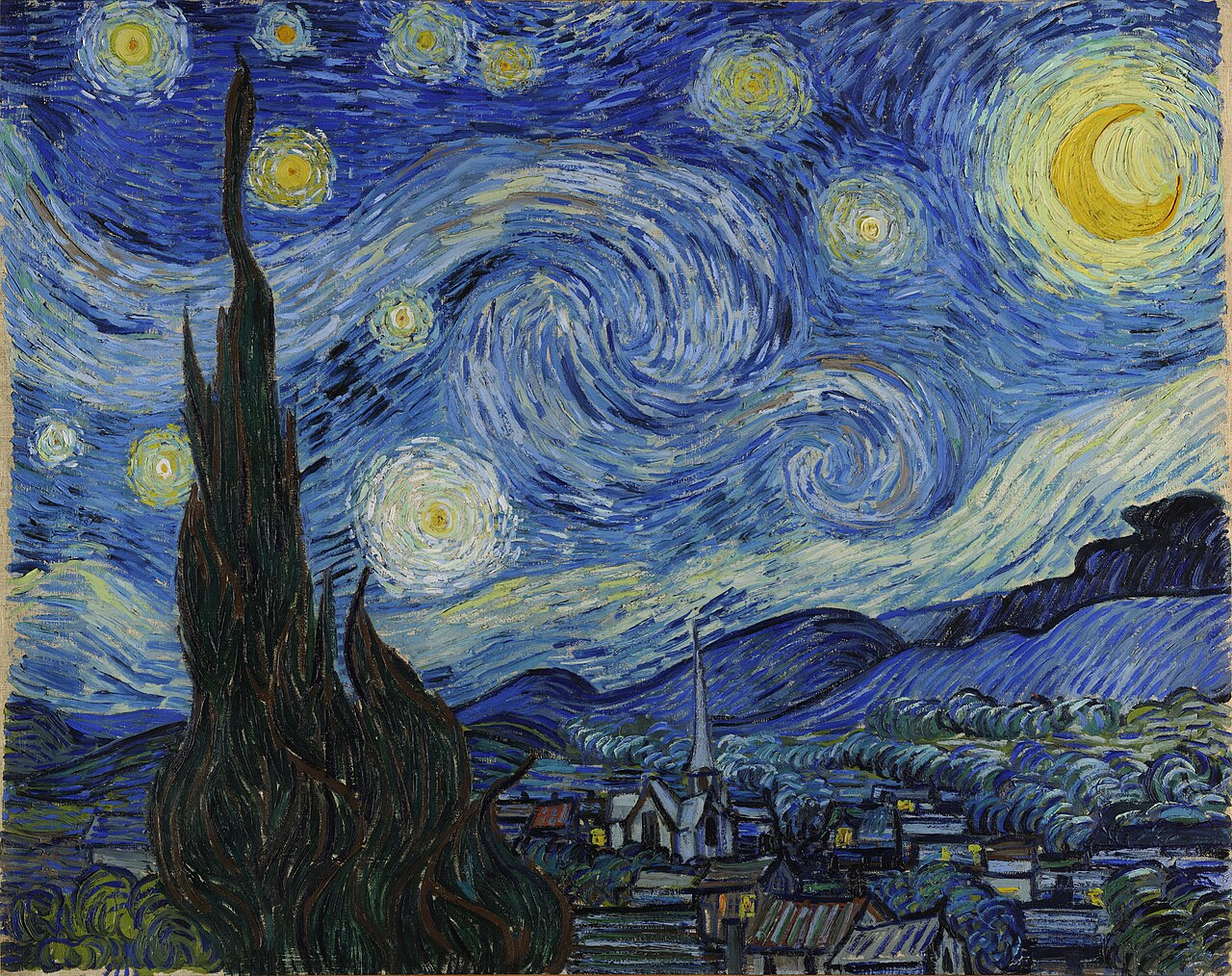
From the book, Color and Light, I learned that light and shadows are always coming from everywhere. In the book, it talked about many types of light and shadows such as reflected light and shadows, light and shadows that are coming from different direction, and so on. I do love learning about lights and shadows because they are the most essential factor to make my drawings more alive.


van gogh starry night에 대한 이미지 검색결과

by Van Gogh - Starry night


van gogh starry night에 대한 이미지 검색결과

by Van Gogh - Cafe Terrace at night


From the book, Graphic LA, I learned that shapes are important again, and composition, arranging drawings is also good thing to know. Sometimes simplest shapes are the best, bold shapes are the best, and never judge my drawings but draw first! Before I jump in to draw, I need to always first explore my thumbnails thinking about compositions, values, tones, and so on.


sunmininn에 대한 이미지 검색결과

by Sunmin Inn

Look at that composition So great!

Tuesday, January 24, 2017

Week 3

Read Composition 101, Thumbnails (100 Tuesday Tips)
Read pgs 18-37 (Graphic LA)


        What I learned today is that thumbnails are always important before I actually draw and paint. With possibilities, I first have thumbnails as many as I can because they will lead me to the actual idea. Thumbnails are always small and quick, and after I pick some that I like to develop, then I can actually design them for final composition. In class, we always do a quick thumbnails for every class with different theme. I think it really helps me to come up with any idea quickly and develop my sense of artist. Also, shapes are always important and values are important as well. And, when simple areas are contradict with complicated areas, the visual design looks better than just busy or just that simple.  


Friday, January 20, 2017

Week 2; start of the color journal

Read Chapter 1: Tradition (Color and Light)

Read pgs 5-17 (Graphic LA)


In Color and Light, I learned that from ancient to the modern, artists put color and light on the top of everything. With figures or even environments, they put color and light on the most important step because they are the most important features to make pictures look realistic. From environments to something magical and fantasy, color and light are the most essential factors in pictures to make them alive.


These are some examples from the book.


For the Graphic LA, what I learned is that I need to start my drawing with a simple shape, keep the value contrast, and then go for details later. As long as I keep my shapes, values, tones, then details are not a matter of the design. Also, keeping a tone in a picture is also important.


These are some examples from the book.